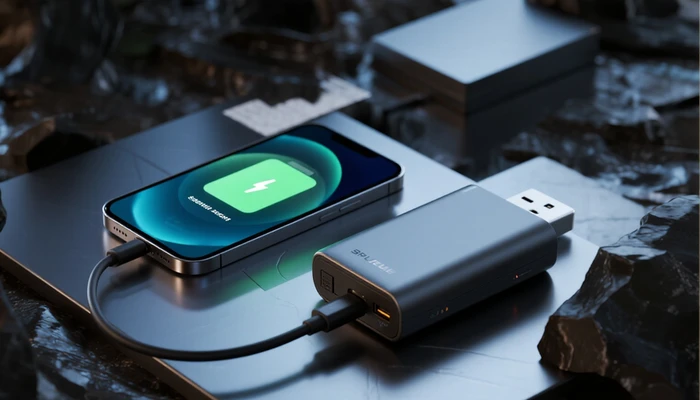
A power bank can be one of the most practical tech accessories you buy. It can keep your phone alive during travel, help you through power outages, and support your devices during busy days away from home. Yet many people buy the wrong one because they focus only on the biggest battery number or the lowest price. Choosing a good power bank is not just about capacity. It is about balancing size, charging speed, reliability, port options, and actual everyday needs.
The first thing most buyers notice is capacity, usually shown in milliamp hours. A bigger number sounds better, but it is not the whole story. A very high-capacity power bank can be useful for long trips or people who charge multiple devices, but it will also be larger and heavier. If you mainly want backup power for a single smartphone during normal days, a smaller and lighter power bank may be the smarter choice. Buying more capacity than you need can make the device less convenient to carry.
Portability should be considered early. Some power banks are slim enough to fit easily into a pocket or small bag, while others are closer to travel bricks that are better left in backpacks. Think honestly about how you plan to carry it. If you want something for daily commuting, a lighter power bank may get far more use than a bulky one with huge capacity.
Charging speed is one of the most important but most overlooked factors. A power bank with high capacity but slow charging can become frustrating. Look for models that support fast charging for both output and input. Output charging speed determines how quickly it charges your devices, while input speed determines how fast the power bank itself recharges. A good balance here saves time and makes the product much more practical.
Port selection matters more than many buyers expect. Some power banks include only one USB output, while others offer multiple ports, including USB-C. If you charge more than one device or want better compatibility with newer phones and tablets, port variety becomes valuable. USB-C support is especially useful because many modern devices now use it for both charging in and charging out.
Build quality is another key point. A power bank is a portable battery, so reliability matters. It should feel solid, not flimsy. Buttons, ports, and casing should inspire confidence. Very cheap products may cut corners in battery quality, heat management, and safety, which can lead to poor performance or shorter lifespan. It is often worth spending a little more for a model from a trusted maker.
Safety features should never be ignored. A good power bank should include protection against overcharging, overheating, overcurrent, and short circuits. Buyers may not always see these features physically, but they matter a great deal in long-term use. A power bank should not just work; it should work safely and consistently.
Compatibility is also important. Some buyers assume every power bank charges every device equally well, but that is not always true. Phones, tablets, earbuds, smartwatches, and other gadgets may charge at different speeds depending on the power bank’s output standards. If you have specific devices in mind, choose a model that supports them properly.
Indicator lights or displays can make a small but useful difference. Knowing how much charge remains helps with planning and avoids surprises. A basic LED indicator is often enough, though some power banks offer more precise displays. This is not the most important feature, but it adds convenience.
Another thing to think about is how many devices you want to charge. If your main goal is simply to keep your phone alive once during the day, you do not need a large, heavy model with many ports. But if you travel with a phone, earbuds, smartwatch, and maybe a tablet, choosing something with more capacity and more outputs makes sense.
Travel habits also matter. Some power banks are easier to carry on flights and fit better into travel routines. Frequent travelers may value a balance between strong capacity and manageable size. People who mostly want home backup during outages may be more comfortable with something bigger.
Value should be measured by usefulness, not just price. A cheap power bank that charges slowly, feels unreliable, or loses capacity quickly is not really good value. A slightly more expensive one that lasts longer, charges faster, and feels dependable may save both money and frustration over time.
The smartest way to buy a power bank is to start with your real use case. Ask yourself what you need to charge, how often you will carry it, how much speed matters, and whether you need one device or several charged at once. A good purchase is not the one with the biggest number on the box. It is the one that fits smoothly into your everyday routine and works when you need it most.
About The Author